

Is Home Improvement Still Relevant? 37 Facts About the Modern Remodeling Market
In an era of rising interest rates and fluctuating real estate markets, many homeowners are asking a critical question: Is home improvement still relevant? A decade ago, home renovation was often synonymous with “flipping” for a quick profit. Today, the motivation has shifted. As housing inventory remains tight, people are choosing to “bloom where they are planted,” transforming their current houses into forever homes.
Home improvement is no longer just about aesthetics; it is about functionality, energy independence, and mental well-being. From the rise of the “home office” to the integration of AI-driven smart systems, the way we interact with our living spaces has fundamentally changed. To understand the current landscape, we have compiled 37 essential facts that prove home improvement is more relevant now than ever before.
The Economic Power of Home Improvement
Market Growth and Spending
- 1. Massive Market Value: The U.S. home improvement industry is valued at over $500 billion annually, showing consistent resilience even during economic shifts.
- 2. Appreciation Buffer: Strategic renovations can increase a home’s value by 10% to 20%, providing a financial safety net against inflation.
- 3. The “Locked-In” Effect: With many homeowners holding low-interest mortgages from previous years, they are choosing to renovate rather than move and take on a higher interest rate.
- 4. ROI Realities: Not all projects are equal. Smaller, functional upgrades often yield a higher Return on Investment (ROI) than massive luxury additions.
- 5. Curb Appeal Value: First impressions matter. Professional landscaping and exterior painting can add up to 7% to a home’s sale price.
- 6. Maintenance vs. Improvement: Nearly 40% of home improvement spending is now dedicated to “discretionary” projects rather than just necessary repairs.
- 7. Kitchens Still Reign: A minor kitchen remodel continues to be one of the most profitable projects, recouping an average of 70-80% of its cost.
- 8. Garage Door Goldmine: Replacing a garage door consistently ranks as the #1 project for ROI, often recouping over 100% of the cost.
The Lifestyle Shift: Why We Renovate Now
Adapting to New Realities
- 9. The Remote Work Revolution: Since 2020, the demand for dedicated home offices has increased by over 300%.
- 10. Multi-Generational Living: More families are renovating basements or adding ADUs (Accessory Dwelling Units) to accommodate aging parents or adult children.
- 11. Wellness Spaces: Modern renovations frequently include “wellness rooms” or home gyms, reflecting a societal shift toward health at home.
- 12. Outdoor Living: Decks, patios, and outdoor kitchens have become “second living rooms,” with 60% of homeowners prioritizing outdoor projects.
- 13. Personalization Over Trends: Homeowners are moving away from “gray-scale” minimalism and toward “maximalism” and personal expression.
- 14. The “Staycation” Factor: Luxury bathroom upgrades, such as steam showers and soaking tubs, are on the rise as people seek spa-like experiences at home.
- 15. Soundproofing: As homes become multi-functional, the demand for acoustic insulation and soundproofing materials has spiked.
- 16. Pet-Centric Design: “Bark-muds” (mudrooms for dogs) and built-in pet feeding stations are becoming standard in high-end renovations.
Sustainability and the Green Movement
Efficiency as a Priority
- 17. Energy Efficiency: 75% of homeowners state that energy efficiency is a top priority in their next renovation project.
- 18. Solar Integration: Solar panel installations have seen a 40% year-over-year increase in residential sectors.
- 19. Insulation Matters: Upgrading attic insulation is one of the most cost-effective ways to reduce monthly utility bills by up to 15%.
- 20. Smart Thermostats: These devices can reduce cooling and heating costs by 10-12%, making them a high-relevance, low-cost improvement.
- 21. Heat Pumps: The transition from traditional HVAC to electric heat pumps is a major trend driven by federal tax incentives.
- 22. Sustainable Materials: The use of reclaimed wood, bamboo, and recycled metal is no longer niche; it is a mainstream design choice.
- 23. Water Conservation: Low-flow toilets and smart irrigation systems are becoming essential in drought-prone regions.
- 24. Tax Credits: The Inflation Reduction Act provides significant tax credits for “green” home improvements, making them more affordable than ever.
The Rise of Technology and Smart Homes
The Future is Connected
- 25. Smart Security: Integrated security systems, including video doorbells and smart locks, are the most common entry point into home improvement.
- 26. Voice Control: More renovations now include “hidden tech,” where lighting and sound systems are controlled via voice or centralized hubs.
- 27. AI in Design: Homeowners are using AI-powered apps to visualize renovations before they ever pick up a hammer.
- 28. EV Charging Stations: Installing a Level 2 electric vehicle charger in the garage is becoming a standard “home improvement” for modern buyers.
- 29. Leak Detection: Smart water leak detectors are being installed during bathroom remodels to prevent catastrophic water damage.
- 30. Circadian Lighting: Advanced lighting systems that mimic the natural sun cycle are being integrated into bedrooms and offices to improve sleep.
The DIY vs. Professional Landscape
How We Get the Job Done
- 31. The YouTube Effect: Over 50% of Millennials feel confident tackling “minor” home improvements thanks to online tutorials.
- 32. Professional Reliance: Despite the DIY trend, complex plumbing, electrical, and structural work remain 90% professional-led.
- 33. Skilled Labor Shortage: A shortage of skilled tradespeople has led to longer wait times for renovations, often up to 6 months for major projects.
- 34. Material Costs: While lumber prices have stabilized, the cost of specialized materials like copper and high-end cabinetry remains 20% higher than pre-2020 levels.
- 35. Permitting Digitization: Many cities have digitized the permit process, making it faster (but not necessarily easier) for homeowners to start projects.
- 36. Aging in Place: Renovations focused on accessibility (wider doorways, walk-in tubs) are increasing as the “Baby Boomer” generation chooses to stay home.
- 37. Emotional Satisfaction: According to the NAR “Joy Score,” 93% of homeowners have a greater desire to be at home after finishing a remodel.
Conclusion: The Verdict on Home Improvement
So, is home improvement still relevant? The data suggests that it is not only relevant but essential for the modern homeowner. We no longer view our homes as mere shelters or speculative assets. They have become our offices, our gyms, our sanctuaries, and our primary tools for battling rising energy costs.
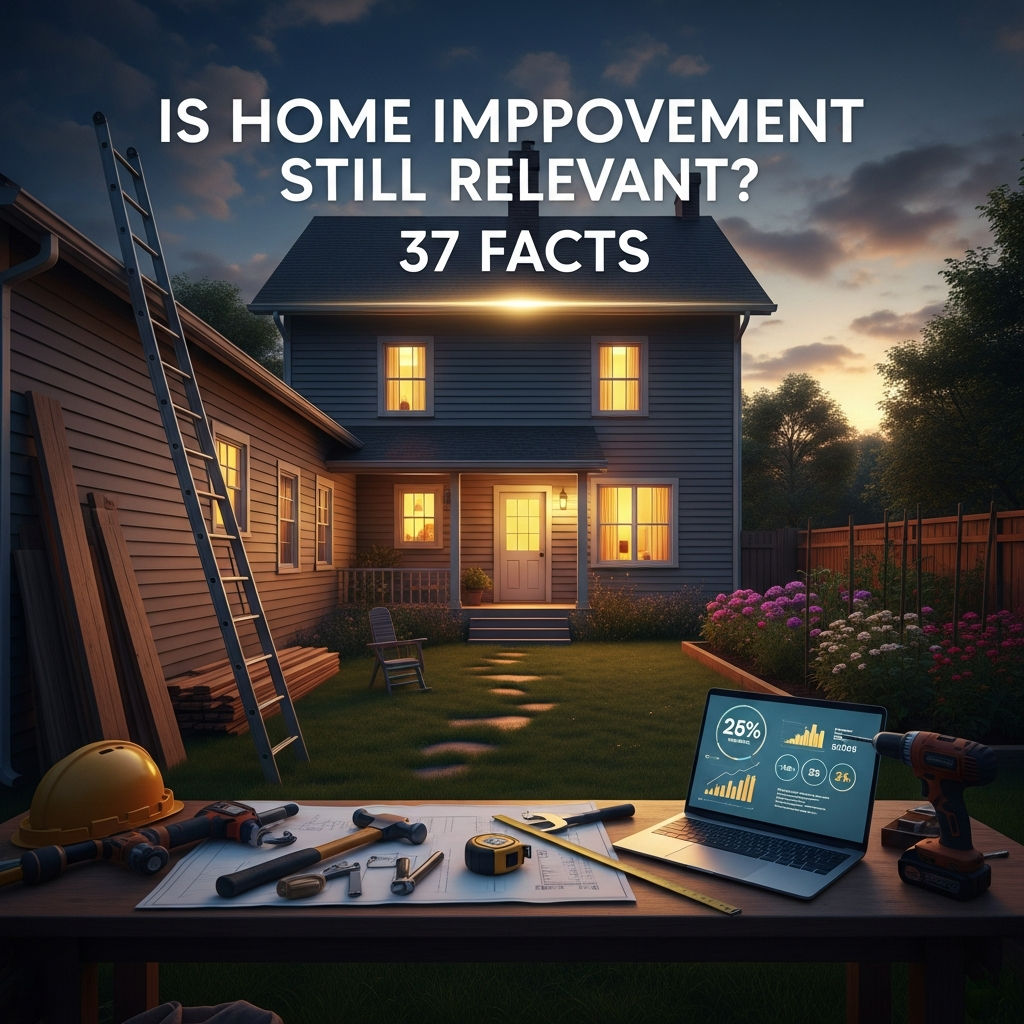
Whether you are looking to increase your property value for a future sale or simply want to create a space that reflects your personality, home improvement offers a unique blend of financial strategy and personal fulfillment. As we move further into the decade, the focus will likely continue to shift toward “smart” and “green” upgrades, proving that the most relevant home is one that evolves with the needs of its inhabitants.
If you are considering a project this year, remember that the most successful improvements are those that balance current lifestyle needs with long-term resale value. Home improvement isn’t just about changing a room; it’s about improving your quality of life.